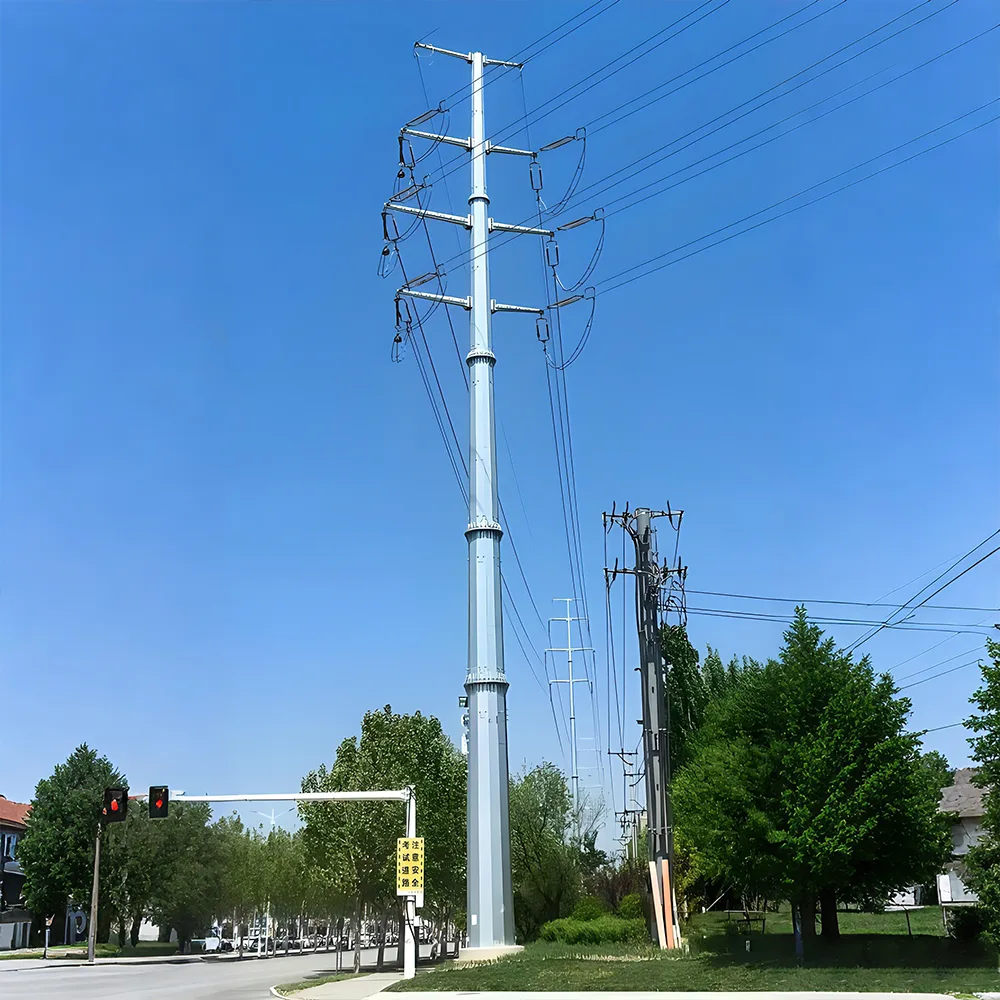
Global power grids are under unprecedented pressure. The transition toward renewable energy, the expansion of ultra-high-voltage transmission networks, and the growing frequency of extreme weather events have placed demands on overhead transmission lines that traditional conductors were never designed to handle.
Traditional aluminum conductors – mainly pure aluminum wires (e.g., 1350 grade) – offer high electrical conductivity (61%–65% IACS) but suffer from limited tensile strength, typically below 180 MPa. This becomes a critical concern in applications such as long-span crossings over rivers or straits, heavy-icing regions, and high-temperature operating environments. When transmission lines span thousands of meters across challenging terrain or must withstand ice loads exceeding design limits, strength matters as much as conductivity.
The key question is this: Can high-strength and heat-resistant Aluminum Alloy Cable solutions overcome the long-standing trade-off between mechanical performance and electrical efficiency to meet the extreme demands of modern power grids? The answer is increasingly yes, but understanding the underlying technology is essential for engineering and procurement teams evaluating conductor options for their next project.
This article examines the material innovations reshaping the aluminum alloy stranded wire industry, supported by technical specifications, market data, and real-world case studies, to help you make informed decisions about conductor selection for your power infrastructure projects.
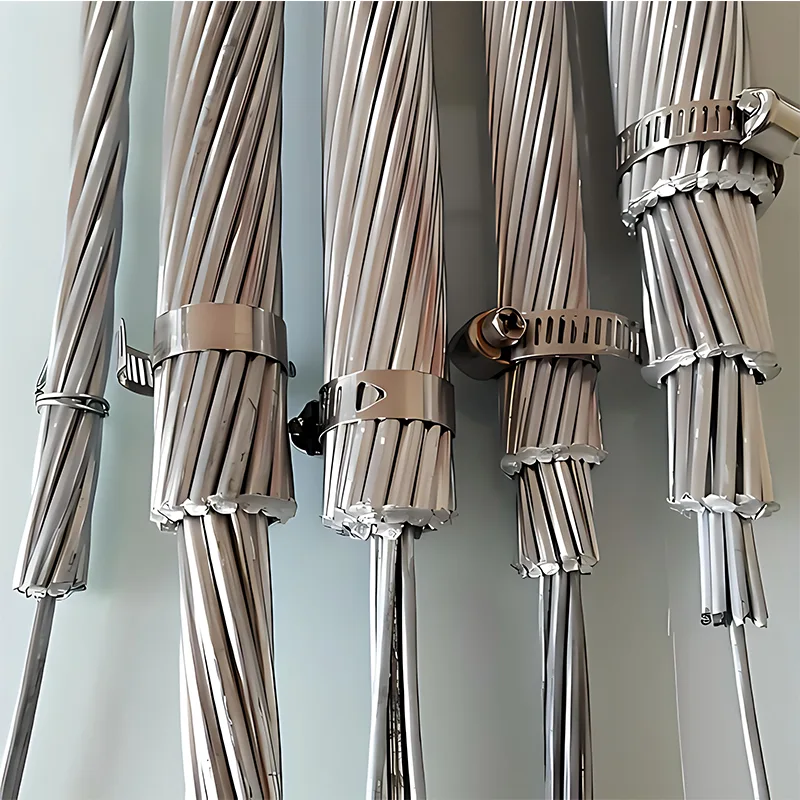
The fundamental challenge in designing high-performance overhead conductors lies in the inverse relationship between strength and conductivity. Al-Mg-Si series alloys (6xxx series) achieve tensile strengths of 255–330 MPa while maintaining conductivity of 30.45–33.35 MS/m, making them the ideal choice for high-strength aluminum alloy conductors. However, strength enhancement – through precipitation hardening, grain refinement, and lattice distortion – inevitably impedes electron transmission, while conductivity optimization tends to weaken strengthening effects.
This performance contradiction has historically limited the widespread adoption of high-strength aluminum alloy conductors in large-scale transmission projects. Recent research has systematically explored breakthrough pathways through compositional microalloying and process coordination. The emergence of rare earth element addition, advanced aging process optimization, and severe plastic deformation techniques is beginning to unlock simultaneous improvements in both mechanical and electrical properties.
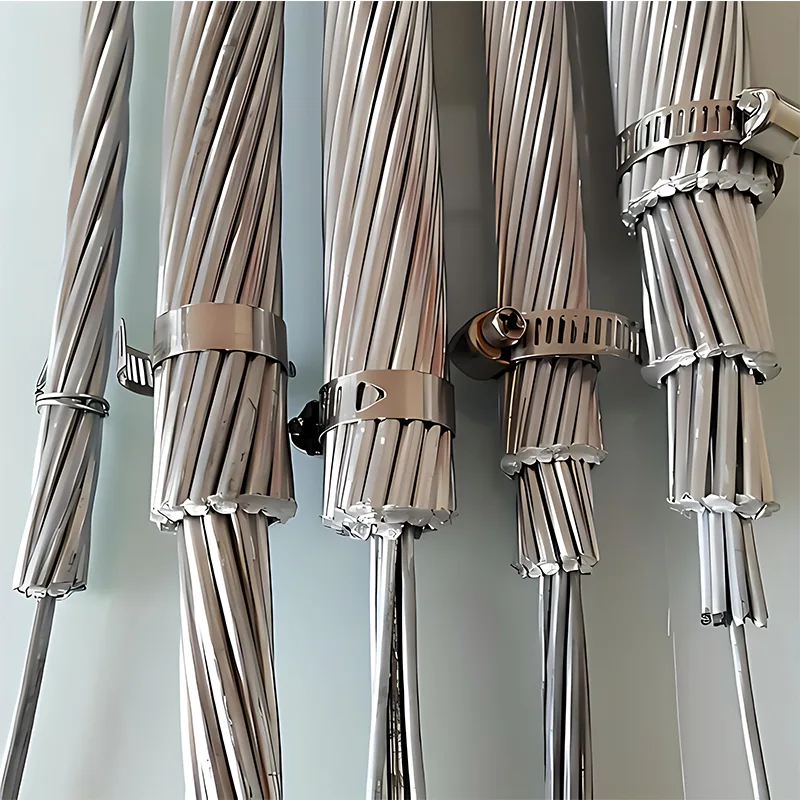
Modern heat-resistant aluminum alloy stranded wires are primarily manufactured using Al-Mg-Si (6201 alloy) or Al-Zr (thermal-resistant) alloys, each engineered to meet specific operational requirements under international standards including IEC 62641, IEC 61089, ASTM B398, and ASTM B399.
The following table summarizes the key technical parameters that define the performance envelope of high-strength heat-resistant Aluminum Alloy Cable products:
| Parameter | Standard Value (6201-T81 AAAC) | Thermal-Resistant Alloy (Type-AT2) |
|---|---|---|
| Material | Al-Mg-Si alloy | Al-Zirconium alloy |
| Tensile Strength | ≥295 MPa (≥43,000 psi) | 159–165 MPa (minimum) |
| Conductivity | 55%–57% IACS | 60%–61% IACS |
| Continuous Operating Temperature | 90°C | Up to 150°C |
| Short-Time Permissible Temperature | 120°C | 180°C |
| Density | 2.70 kg/dm³ at 20°C | 2.70 kg/dm³ at 20°C |
| Temperature Coefficient | 0.00360 /°C | 0.00360 /°C |
| Coefficient of Linear Expansion | 23 × 10⁻⁶ /°C | 23 × 10⁻⁶ /°C |
| Resistivity | 0.03284 Ω·mm²/m at 20°C | 0.02826 Ω·mm²/m at 20°C |
| Residual Strength After 230°C/1h | — | ≥90% |
Sources: ASTM B399, IEC 62641, and industry technical publications.
The concentric-lay stranded construction of aluminum alloy conductors provides mechanical balance and even current distribution while maintaining flexibility for installation. Different designs serve different applications:
| Conductor Type | Core Composition | Current-Carrying Capacity vs. Standard ACSR | Primary Applications |
|---|---|---|---|
| AAAC (All-Aluminum Alloy Conductor) | Single-layer or multi-layer 6201 alloy | Comparable to ACSR, lower losses | Medium spans, coastal areas, urban distribution |
| TACSR (Thermal-Resistant Alloy Conductor Steel Reinforced) | Aluminum-Zirconium alloy outer layer + steel or Invar core | 50%–80% higher | Capacity expansion, corridor-constrained sections |
| AACSR (All-Aluminum Alloy Conductor Steel Reinforced) | 6201 alloy outer layer + galvanized steel core | Moderate increase |
Source: HTLS conductor industry data.
For large crossing sections where wind load on towers is a critical design factor, high-strength thermal-resistant Aluminum Alloy Cable offers a decisive advantage. For instance, AAAC with optimized stranding patterns can achieve breaking loads of 34–170 kN across nominal cross-sections ranging from 16 mm² to 560 mm², as detailed in the construction parameters available for various configurations.
As a professional integrated power system solution provider founded in 2011 and based in Wangjing Science and Technology Park, Beijing, Huixing Zhongdian (Beijing) Electric Co., Ltd. combines 15 years of deep industry experience with a global operational footprint spanning South Korea, Indonesia, Vietnam, the United States, and the Dominican Republic.
Huixing brings together China’s superior electrical manufacturing capabilities with global market access. Through strategic partnerships with specialized manufacturing facilities – covering core processes including forging, casting, sheet metal processing, and injection molding – the company maintains high-quality production capabilities supported by advanced testing and assembly equipment. All products have obtained ISO 9001 certification and passed tests in compliance with international standards such as IEC and ASTM.
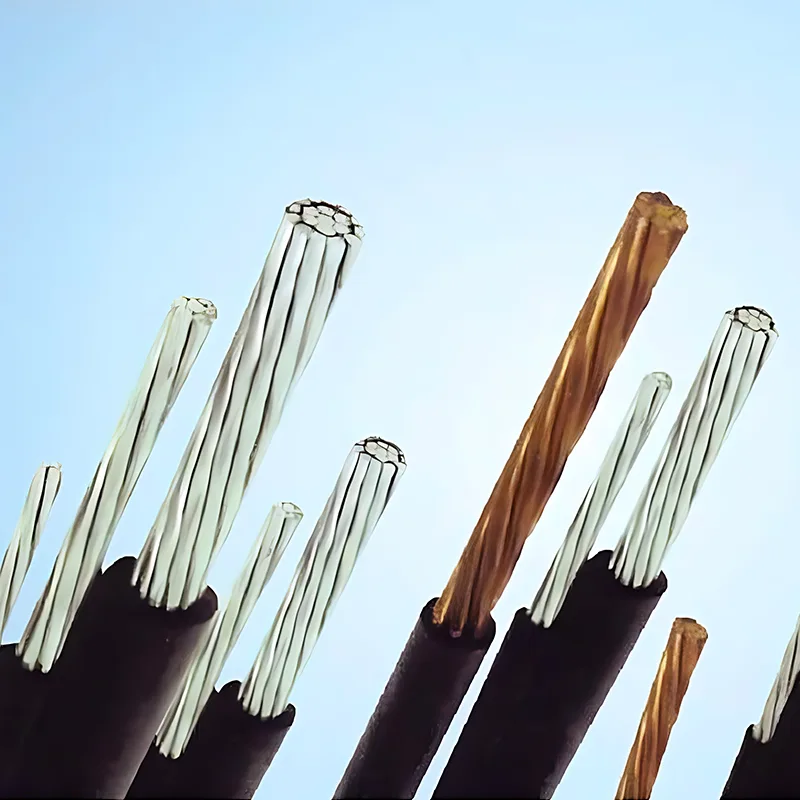
Within Huixing’s comprehensive power product lineup, the Aluminum Alloy Cable portfolio includes:
- AAC (All-Aluminum Conductor)
- AAAC (All-Aluminum Alloy Conductor)
- ACSR (Aluminum Conductor Steel Reinforced)
- XLPE insulated power cables (0.6kV–138kV)
These overhead line conductors are engineered to deliver dependable performance across transmission, distribution, and substation applications. With overseas branches in South Korea, the Dominican Republic, and the United States, Huixing effectively connects China’s manufacturing excellence with power infrastructure projects worldwide.
The global market for aluminum alloy conductors is expanding at an accelerated pace. The Aluminum Alloy Low-voltage Cable Market was valued at USD 5.47 billion in 2025 and is projected to reach USD 7.79 billion by 2032, representing a compound annual growth rate (CAGR) of 5.17%. Meanwhile, the global overhead aluminum conductor cable market reached approximately USD 452 million in 2025 and is expected to grow to USD 600 million by 2032, with a CAGR of 4.2%.
Several factors are fueling this growth:
1. The copper-aluminum substitution trend. With copper prices increasing approximately 50% in early 2026 while aluminum prices remain relatively stable, the economic case for aluminum alloy conductors has strengthened substantially. Aluminum Alloy Cable costs approximately 30%–50% of copper equivalents while offering comparable current-carrying capacity.
2. Grid modernization and capacity expansion. Utilities worldwide are reconductoring aging transmission lines with high-temperature low-sag (HTLS) conductors such as TACSR, which can boost line capacity by 50%–100% without requiring new rights-of-way or tower modifications.
3. Renewable energy integration. The expansion of solar and wind farms, often located in remote areas, creates demand for lightweight, corrosion-resistant overhead conductors that can span long distances with minimal infrastructure.
4. Surging export demand. China’s aluminum stranded wire exports reached approximately 27,580 metric tons in April 2026, up 28.95% year-over-year. Aluminum stranded wire (HS code 76149000) alone surged 94.5% month-over-month to approximately 15,500 metric tons. Export destinations remain concentrated in Southeast Asia, Africa, and East Asia, indicating robust international demand for advanced Aluminum Alloy Cable products.
High-strength aluminum alloy conductors have demonstrated exceptional performance in harsh environments where traditional conductors would fail. Key application scenarios include:
- Heavily polluted or coastal areas: AAAC conductors, being composed entirely of aluminum alloy with no steel core, eliminate the risk of galvanic corrosion that plagues ACSR in marine or industrial environments.
- Medium-to-heavy ice zones: The high strength-to-weight ratio of 6201 alloy conductors maintains mechanical integrity under ice loads that would cause sag and clearance violations in pure aluminum (e.g., 1350 grade) designs.
- Capacity-expansion retrofits: TACSR conductors operating at 150°C can increase transmission capacity by 50%–80% on existing towers without new corridor acquisition.
- Large-span crossings: High-strength thermal-resistant conductors with 58% IACS conductivity and tensile strength 1.5 times that of standard thermal-resistant alloys are specifically engineered for spans exceeding 1,000 meters across straits or rivers.
A1: Conventional ACSR (Aluminum Conductor Steel Reinforced) consists of pure aluminum strands (typically 1350 grade) wrapped around a steel core. The steel core provides mechanical strength but introduces several limitations: galvanic corrosion between aluminum and steel, magnetic hysteresis losses, and a lower continuous operating temperature ceiling of approximately 90°C.
High-strength heat-resistant Aluminum Alloy Cable, in contrast, uses Al-Mg-Si (6201 alloy) or Al-Zr alloy wires that are heat-treated to achieve superior mechanical properties without relying on a steel core. These alloys achieve tensile strengths of 295–330 MPa while maintaining conductivity of 55%–61% IACS. The homogeneous material composition eliminates galvanic corrosion concerns, reduces line losses by avoiding magnetic effects in the core, and – in the case of thermal-resistant alloys – enables continuous operation at 150°C with specified strength retention. Additionally, the lightweight construction (density 2.70 kg/dm³) simplifies installation and allows wider tower spacing, reducing overall project infrastructure costs.
A2: Yes, modern aluminum alloy stranded wires undergo rigorous international standard testing to ensure long-term reliability under extreme operating conditions. The primary concerns that have historically affected aluminum conductor reliability – annealing from prolonged heat exposure, creep under sustained tension, and corrosion in aggressive environments – have been substantially mitigated through advanced alloy design and heat treatment processes.
Heat resistance: Aluminum-Zirconium alloy conductors (Type-AT2 per IEC 62004) retain ≥90% of their initial tensile strength after exposure to 230°C for one hour. This ensures mechanical integrity even during fault conditions or sustained high-temperature operation. Specialized aluminum alloys like 6201-T81 are tempered to resist annealing from prolonged heat exposure, maintaining mechanical integrity even when conductors run hot over extended periods.
Creep resistance: High-strength aluminum alloys demonstrate creep resistance up to three times that of conventional pure aluminum (e.g., 1350 grade), preventing the progressive loosening of connections and maintaining electrical and mechanical contact integrity under thermal cycling. This property is critical for ensuring stable long-term operation in regions with large seasonal temperature variations.
Corrosion resistance: In coastal or industrial environments, AAAC conductors outperform ACSR because they contain no dissimilar metals, eliminating galvanic corrosion entirely. The uniform aluminum alloy composition provides natural resistance to atmospheric corrosion without the need for protective coatings.
Compliance with international standards such as IEC 62641, ASTM B398, and ASTM B399 ensures that certified products have passed tensile testing, resistivity measurements, thermal cycling, and corrosion exposure evaluations, providing a verifiable baseline for long-term performance.
A3: Yes, the adoption of advanced Aluminum Alloy Cable offers compelling total cost of ownership (TCO) advantages over copper conductors, particularly for large-scale transmission and distribution projects. The economic benefit manifests across multiple dimensions of project planning and lifecycle management.
Material cost: Aluminum alloys cost approximately one-third as much as copper on a per-ton basis. With copper prices exceeding USD 12,800 per ton and aluminum prices around USD 3,400 per ton in early 2026, the raw material cost differential has widened dramatically. Aluminum Alloy Cable typically costs 30%–50% less than copper equivalents while offering comparable current-carrying capacity.
Weight and installation: Aluminum’s density is approximately one-third that of copper (2.70 vs. 8.96 kg/dm³). A 1 km length of overhead conductor using Aluminum Alloy Cable can weigh 60%–70% less than a copper conductor of equivalent ampacity. This weight reduction translates directly into lower transportation costs, simpler handling at the job site, reduced tower structural requirements, and easier stringing operations. Installation labor costs can be reduced by 15%–25% depending on terrain and accessibility.
Tower spacing and infrastructure: The high strength-to-weight ratio of AAAC and similar alloys allows wider tower spacing compared to pure aluminum (e.g., 1350 grade) or smaller copper conductors. For a new transmission line, this reduces the number of support structures required per kilometer, lowering material procurement, foundation construction, and land acquisition costs.
Maintenance and lifecycle: The corrosion resistance of Aluminum Alloy Cable eliminates the periodic maintenance required to address galvanic corrosion in ACSR designs. The homogeneous alloy composition also reduces the risk of failure at connection points due to differential thermal expansion or galvanic effects.
When evaluated on a TCO basis, the total economic advantage of aluminum alloy conductors over copper typically ranges from 40%–60% over a 30-year service life, making them the preferred choice for utilities and project developers seeking to balance performance requirements with budget constraints.
The latest generation of high-strength and heat-resistant Aluminum Alloy Cable has definitively demonstrated its ability to meet the extreme demands of modern power grids. Through advances in alloy composition, heat treatment optimization, and precision manufacturing processes, the long-standing performance contradiction between strength and conductivity is being systematically overcome. Al-Mg-Si series alloys achieving 295–330 MPa tensile strength with 55%–61% IACS conductivity are now commercially available and field-proven across diverse global applications.