Huixing provides Medium Voltage Instrument Transformers for 10–17.5 kV power distribution systems, supporting accurate energy metering, real-time monitoring, and dependable protective relaying for substations and outdoor electrical installations.
Article Summary: Medium voltage instrument transformers are essential components in modern electrical distribution networks. By converting high current and voltage values into standardized signals, they enable meters, monitoring systems, and protective relays to operate safely and accurately. This guide explains current transformers (CTs), voltage transformers (VTs), their primary applications, important technical specifications, and selection considerations. It also explores the benefits of integrated designs, outdoor adaptability, overload performance, and standards compliance. For engineers, electrical contractors, and procurement professionals, understanding these factors helps identify suitable instrument transformers for reliable, efficient, and space-conscious power distribution systems.
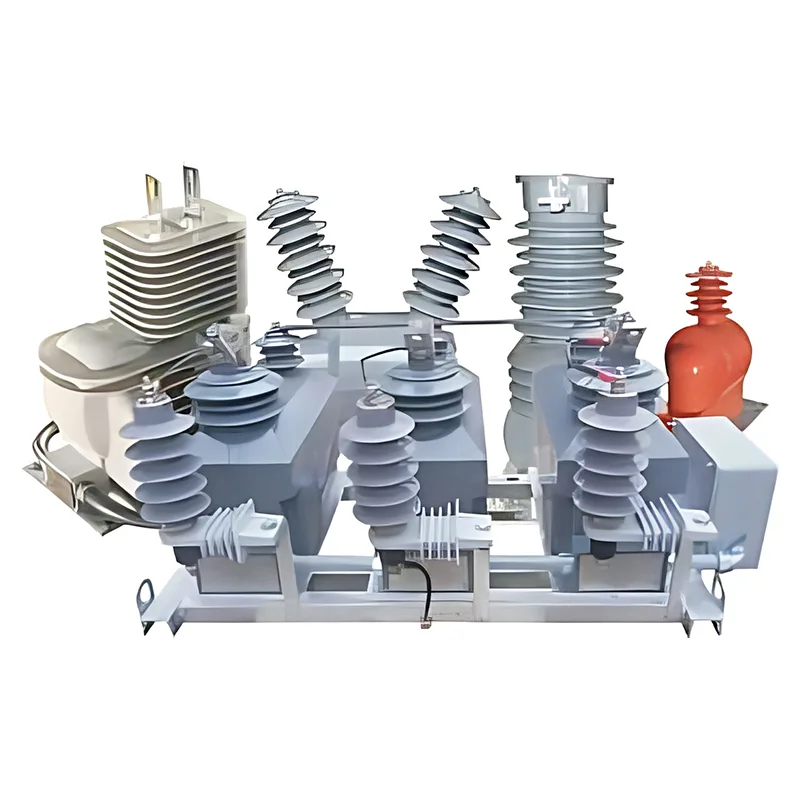
Medium voltage instrument transformers are electrical measurement devices designed to reduce high primary currents or voltages to lower, standardized secondary values. They create a practical interface between medium voltage power circuits and low-voltage measuring, control, and protection equipment.
Unlike power transformers, which transfer electrical energy between circuits at different voltage levels, instrument transformers primarily provide electrical measurement and signal isolation. Their performance directly affects the accuracy of metering systems and the reliability of protective devices.
Two main types are used in power distribution:
In medium voltage networks, these devices are commonly installed in substations, switchgear assemblies, distribution stations, and outdoor electrical installations. Their ratings and insulation systems must match the operating conditions of the equipment they serve.
Instrument transformers use electromagnetic induction to reproduce primary electrical quantities as secondary signals. These signals are designed to be proportional to the original values within the specified accuracy range and operating conditions.
A current transformer produces a reduced secondary current corresponding to the current flowing through its primary circuit. For example, a 100/5 A CT has a nominal transformation ratio of 20:1. Under its specified operating conditions, a primary current of 100 A corresponds to a secondary current of approximately 5 A.
Current transformers are used for energy metering, load monitoring, and fault-current detection. Their accuracy and protection characteristics must be appropriate for the connected equipment and the expected current range.
A voltage transformer reduces the primary voltage to a lower secondary voltage suitable for measurement and control equipment. The transformation ratio depends on the system voltage, the transformer's rated primary and secondary voltages, and the intended application.
Combining current and voltage measurement in a coordinated assembly can simplify the electrical layout. Huixing offers an integrated configuration that combines three current transformers and three voltage transformers (3CT+3PT) into one compact unit for suitable distribution installations.
For additional information about related electrical equipment, explore Huixing's gas insulated switchgear solutions.
Medium voltage instrument transformers support measurement, monitoring, and protection functions throughout distribution networks. Selecting the appropriate configuration helps electrical engineers meet project requirements without compromising safety or measurement performance.
In outdoor substations, instrument transformers supply measurement signals to energy meters, monitoring systems, and protective relays. Accurate current and voltage data support electricity billing, load assessment, and operational decision-making.
Instrument transformers provide electrical signals for protection schemes associated with distribution lines, power transformers, capacitor banks, and switchgear. During abnormal operating conditions, these signals help relays identify faults and initiate appropriate protective actions.
Space is often limited in compact distribution stations and prefabricated substations. An integrated transformer assembly can reduce the number of separately installed components, simplify equipment arrangement, and help engineers use the available enclosure space more efficiently.
Outdoor distribution equipment must withstand environmental exposure while maintaining dependable insulation and measurement performance. Appropriately designed instrument transformers can be integrated with pole-mounted switches, ring main units, and other compatible outdoor equipment.
Technical specifications determine whether an instrument transformer is suitable for a particular electrical installation. Buyers should evaluate the complete rating configuration rather than relying on nominal voltage alone.
| Parameter | Huixing Product Information | Why It Matters |
|---|---|---|
| Application voltage range | 10–17.5 kV systems | Establishes the intended medium voltage application range. |
| Integrated configuration | 3CT+3PT | Combines three current transformers and three voltage transformers in one assembly. |
| Insulation level | 17.5/38/95 kV | Indicates the specified insulation ratings; confirm the applicable test definitions and rating requirements. |
| Current overload capability | 120% continuous current; 130%–150% for up to 8 hours, as specified | Helps assess suitability for varying loads within the stated operating conditions. |
| Instrument security factor | FS=5 | Relevant to the protection of connected measuring instruments under specified conditions. |
| Secondary winding voltage | 3 kVef, as stated in the product description | Requires confirmation against the manufacturer's technical documentation and the intended application. |
| Applicable standards | IEC 60044-1, ANSI C57.13, IEC 61869-1 and IEC 61869-4 are referenced on the product page | Supports evaluation of measurement performance, insulation, testing, and application requirements. |
Note: The table summarizes information published on the product page. Confirm the exact model-specific ratings, applicable standards and editions, test conditions, and contractual specifications with the manufacturer before purchase. Values should not be assumed to apply identically to every configuration.
Accuracy class defines the permitted measurement error under specified conditions. Rated output, generally expressed in volt-amperes (VA), indicates the burden that a transformer is designed to support while meeting its specified performance requirements.
For metering applications, engineers should evaluate the required measurement accuracy and the connected instrument burden. Protection applications require a separate assessment of relay requirements, fault-current conditions, and the transformer's specified protection performance.
Insulation performance must match the system's maximum voltage and required withstand levels. Huixing's product information also specifies a short-time thermal current of 80 times rated current for one second and a dynamic current of 2.5 times that stated thermal-current reference. Because these are significant ratings, the exact interpretation and applicability should be verified in the manufacturer's technical documentation before engineering approval.
Integrated medium voltage instrument transformers can help improve installation efficiency and simplify equipment layouts. The actual benefits depend on the selected model, switchgear arrangement, environmental conditions, and project specifications.
Combining current and voltage transformers in one assembly can reduce the footprint required for separate components. This is particularly useful in compact substations, box-type distribution stations, and installations where panel space is limited.
The Huixing product description identifies cast-resin insulation and outdoor suitability as key features. Its integrated configuration is also described as using CPE-type outdoor wall bushings for compatible installations. Project teams should confirm the required environmental ratings, mounting arrangement, pollution conditions, and weather exposure before specifying a unit.
A coordinated assembly may simplify component positioning and secondary wiring. Preconfigured equipment can also reduce some on-site assembly work, although the installation still requires qualified personnel, correct terminal connections, and verification against approved drawings.
Appropriately specified instrument transformers provide the input signals required by meters, monitoring devices, and protective relays. Their performance supports reliable operational decisions, provided that the complete measurement and protection chain is correctly designed.
Choosing a medium voltage instrument transformer requires coordination between electrical design, equipment integration, safety requirements, and procurement planning. A detailed specification helps prevent mismatches between the transformer and the connected system.
Working with an experienced medium voltage instrument transformer manufacturer can help buyers clarify technical requirements before production. For customized installations, provide the single-line diagram, system ratings, application description, and required interface dimensions when requesting a quotation.
Correct installation is essential to maintaining measurement accuracy and electrical safety. Instrument transformers must be installed according to the approved drawings, equipment instructions, applicable electrical codes, and site-specific safety procedures.
Important safety precaution: Never open-circuit an energized current transformer's secondary winding. Dangerous voltages may develop. Voltage transformer secondary circuits must also be protected against short circuits, and their secondary grounding and protection must follow the approved design.
Maintenance intervals should follow the manufacturer's recommendations, site operating conditions, and applicable regulations. Typical inspections may include checking for insulation damage, contamination, loose connections, corrosion, overheating, and evidence of moisture ingress.
For outdoor installations, environmental exposure and pollution levels should be considered when planning inspection and cleaning schedules. Any abnormal readings or visible defects should be assessed by qualified electrical personnel before the equipment is returned to service.
Their primary purpose is to convert high primary currents and voltages into lower secondary signals for measurement, energy metering, monitoring, and protective relaying. This allows low-voltage instruments and protection systems to obtain the electrical information needed to monitor medium voltage networks.
A current transformer reduces primary current to a proportional secondary current, while a voltage transformer reduces primary voltage to a proportional secondary voltage. Both support measurement and protection, but they have different ratings, connection arrangements, and safety requirements.
Huixing describes its medium voltage instrument transformers for 10–17.5 kV power distribution systems. Buyers should confirm the exact model, maximum system voltage, insulation level, transformation ratios, and applicable technical specifications for their project.
Yes, models specifically designed and rated for outdoor use can be installed in suitable outdoor distribution applications. Before purchase, verify the environmental suitability, insulation design, mounting requirements, and compatibility with the installation site.
An integrated 3CT+3PT assembly combines three current transformers and three voltage transformers in one unit. It can save space and simplify equipment arrangement in compact substations and other compatible distribution installations. The configuration should be checked against the project's electrical diagram and metering requirements.
Request a model-specific datasheet, approved technical drawings, transformation ratios, accuracy classes, rated outputs, insulation ratings, applicable standards, and relevant test documentation. For customized projects, confirm the installation interface and required secondary connections before approving the order.
Medium voltage instrument transformers are essential to accurate measurement, effective protection, and dependable operation in modern power distribution networks. Their suitability depends on correct transformation ratios, accuracy requirements, insulation performance, fault withstand capability, and compatibility with the complete electrical installation. Integrated designs can offer additional benefits where space and installation efficiency are important.
Huixing provides medium voltage instrument transformer solutions for 10–17.5 kV distribution applications, including metering, monitoring, and protection requirements. If you are planning a substation upgrade, developing a compact distribution system, or sourcing equipment for an outdoor electrical project, review your technical requirements carefully and contact us to discuss product specifications, configuration options, and a suitable quotation for your project.